


What is a micro data center?
A modular micro data center (MMDC), also known as an EDGE Data Center, is a solution consisting of server cabinets with full data center capabilities, such as: cooling systems, UPS, monitoring and control, fire detection and suppression systems, and access control.
This solution is useful anywhere data processing is required—for example, disaster recovery, or temporary and permanent deployments in both indoor and outdoor environments.
What is EDGE Computing?
The term EDGE Computing refers to computing at the edge of the network. It provides compute and storage capabilities closer to where the data is actually generated. In the context of IoT, EDGE Computing enables data to be processed nearer to IoT devices, avoiding potential congestion on communication links when transmitting to centralized Data Centers (whether in the Cloud or on-premises) and ensuring an optimal response time within required frames.
Let’s look at an example
Consider a factory, industrial facility, or oil platform with thousands of sensors connected to its production processes. This massive volume of data—which can reach up to 10 GB per second—needs to be sent to a Data Center for proper processing. If a traditional Centralized Data Center or Cloud architecture is used, network links can become heavily congested, alongside high bandwidth costs. This is where EDGE Computing offers exceptional value: installed closer to where the sensors are located, it guarantees rapid response times without demanding high bandwidth to the central Data Center.
What is Fog Computing?
Fog Computing is a term coined by Cisco Systems in 2014. The fog metaphor stems from the meteorological concept of a cloud closer to the ground, just as fog computing operates at the edge of the network. Fog computing is a standard defining how EDGE Computing should operate, facilitating compute, storage, and networking services between end devices and Centralized or Cloud Data Centers. Additionally, many organizations use fog computing as a starting point for EDGE Computing.
EDGE computing requires a physical space to house compute, storage, and networking hardware, and that is precisely where the Micro Data Center fits in as an optimal solution.
What are the main drivers of the Micro Data Center?
The need to reduce latency in applications such as:
- Driverless vehicles.
- Automated trains and buses.
- Manufacturing processes.
- Healthcare.
- The Internet of Everything (IoE) phenomenon.
- IP traffic growth.
According to Cisco Systems, IP traffic will experience an annual growth rate of 24%, rising from 121,694 PB to 278,108 PB by 2021.
According to Gartner, there will be over 20 billion connected IoT devices by 2020 (compared to around 8 billion in 2018). In the near future, there will be more connected devices than human beings on Earth.
Currently, only 1% of generated data is created and processed outside the traditional Data Center or Cloud; by 2022, Gartner predicts this figure will reach 50%.
Traditional computing architecture is based on a device connected to a Centralized Data Center or Cloud.
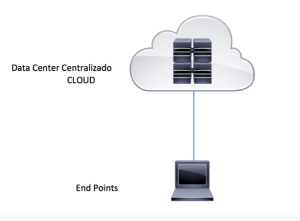
Disadvantages of this model:
- Congestion.
- Limited Bandwidth.
- High Latency.
- Not recommended for latency-sensitive applications (IoT).
- Data volume grows faster than available bandwidth.
Fog Computing Model
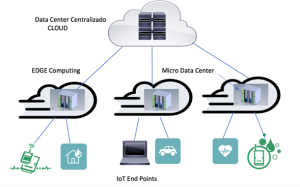
Advantages:
- Low Latency.
- Data processed closer to the user or point of origin.
- Rapid deployment.
- Lower telecommunication link costs (Less Bandwidth needed).
- The Future of Micro Data Centers. By 2021, it is estimated that 25% of enterprise organizations will have deployed a Micro
Data Center, source Gartner.
In a recent survey conducted by IDC, 54% of respondents stated they will deploy their EDGE infrastructure on their own premises.
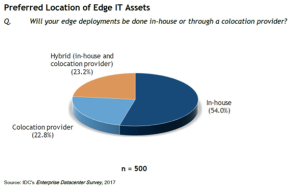
Some have declared 2019 as the year of the Micro Data Center or Edge Data Center. Other Uses for the Micro Data Center
The Modular Micro Data Center is useful anywhere data processing is needed, such as:
- Edge Computing.
- Offices and Factories.
- Bank Branches.
- Mobile Sites.
- Hospitals.
- Educational Centers.
- Supermarkets.
- Remote locations and extreme environments such as:
- Mines. Petroleum.
- Farms.
Telecom Towers. To learn more about our Micro Data Center solution, visit us at https://www.ndc-solutions.com/micro-data-center-modular.html or contact us via info@ndc-solutions.com.