


Modular data centers are here to stay. These solutions have been gaining ground in recent years, with more projects of this type emerging every day, and everything indicates that this trend will continue into the future.
When the first modular data centers implemented in shipping ISO containers were put into operation, they revolutionized an industry that had remained largely unchanged for decades. Initially, as with any breakthrough, many remained cautious—even more so in an industry unaccustomed to seeing changes as constant as those in the rest of IT and Communications.
With the emergence of the Internet of Things (IoT) phenomenon and the increase in IP traffic, we have observed how the Data Center industry has evolved to give way to EDGE Computing, where the Micro Data Center or Edge Data Center appears to support this concept.
Driven in part by these new challenges and the need to leverage the advantages of Modular Data Centers in projects where containerized Data Centers were not viable, solutions have continued to evolve. Today, we find module-based or prefabricated solutions for both indoor and outdoor use.
It is very common to think that a modular data center = data center in a container, but this is only a partial view of what a Modular Data Center really is. Now, let’s look at the advantages and disadvantages of the different formats: Modules vs. ISO Containers.
ISO Containers

They are used for transporting cargo via sea and land. The most common dimensions are:
20 feet (6 meters), 40 feet (12 meters), 40 feet (12 meters) High Cube
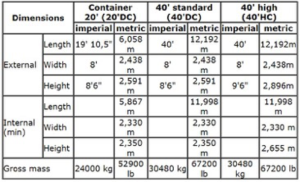
Containers are manufactured to withstand harsh environments such as rain, salt spray, snow, hail, etc. In addition, meeting ISO standards allows them to be easily loaded onto trucks, ships, and transported across highways in any country.
Another advantage found in ISO containers is cost and the large available supply in various markets.
Converting an ISO Container into a data center
To implement a Modular Data Center in a container, it must be brand new or in very good condition. Remember that the IT equipment housed inside, and especially the stored data, will have a value far exceeding that of the container itself; therefore, complete waterproofing must be guaranteed to prevent water, dust, or smoke infiltration.
Another key consideration is the need for structural reinforcement. Once a container is cut to install access doors, cable entries (Telecom and Power), and mechanical components, it loses structural integrity, as the walls form an integral part of the container’s support.
When designing a Modular Data Center inside a container, the layout revolves around the container itself, meaning all components must fit within its predefined dimensions.
Applicability
Containerized Data Centers are useful in open spaces where positioning them with cranes is straightforward, or within warehouses designed for that purpose.
Modules
Modules are an excellent alternative for implementing a Modular Data Center. Let’s look at some of their characteristics:
Modules can be designed and built to custom measurements, suitable for both indoor and outdoor environments.
At NDC Solutions, our modules are manufactured from structural aluminum with fire-resistant panels that withstand extreme environmental conditions such as torrential rain, snow, hail, corrosive environments, and hurricane-force winds. They can also be customized to meet special requirements such as shielding, seismic resistance, and electromagnetic protection.
The design focuses entirely on the client’s needs and requirements; once formulated, the module is tailored so all internal elements can be installed seamlessly.
Modules can be built wider—up to 10 feet (3 meters)—to accommodate racks of varying depths in compliance with the TIA 942 standard. They can also be built up to 10 feet (3 meters) high, allowing the installation of up to 50U racks and facilitating easier routing of cable trays or Power Busways.
Can non-standard equipment be installed?
Since modules are designed and built around client specifications, they can house non-standard equipment such as mainframes, storage units, and library backups that come in custom dimensions.
Do Modules require specialized transportation?
Modules can be easily transported by sea and land while adhering to standard maximum dimensions (width, length, and height) for ground freight. They are typically transported using “Low Bed” trailers, which are common worldwide and allow high-clearance loads to pass under bridges and through tunnels.
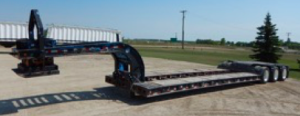
Low Bed Trailer
How does scalability apply for growth?
Module-based Data Centers are easier to expand because future growth is incorporated into the initial design. Expanding is as simple as adding an extra module and integrating it into the existing structure, which can be done while the Data Center remains operational.
Based on our experience, every client’s needs are unique and difficult to satisfy with standardized solutions. That is why at NDC Solutions, following our commitment to providing fully customized solutions, the Modular Data Centers we design and manufacture are module-based to fulfill the individual requirements of each customer.
To learn more about our solutions, visit us at https://www.ndc-solutions.com or contact us at info@ndc-solutions.com.